Keyword Search Finds The Word And Misses The Story

The search returned three hundred and eleven results for one name, and I read every one of them in a morning. Each hit arrived the same way, a sentence with a date attached, cut loose from the page it came out of. The book I wrote about the fifteenth governor of Texas carries the name Rosser Newton on the spine, and almost nothing in it came from a morning like that one.
What came out of that morning was a list of places to go look. That is a real thing to have, and it stops well short of evidence. The evidence was still sitting on the pages the search had reached into, and I had to go read them.
What A Newspaper Keyword Search Actually Returns
A digitized newspaper archive is a stack of photographs of paper with a machine transcription laid underneath. The search runs against the transcription. Everything the transcription got wrong is invisible to you and to the machine at the same time.
Worn type, a fold through a column, a page scanned slightly out of square, a compositor who spelled a surname two ways in the same issue. Any of those can put a real mention outside the reach of a query, and none of them announce themselves. A search result set is the set of mentions the transcription could read, which is a narrower thing than the set of mentions that exist.
Then there is what a hit withholds even when it is perfectly accurate. It gives you a sentence, a date, and a paper. It does not give you the column running beside it, the notice two inches down that names the same men, the advertisement that says who was doing business with whom that season, or the plain fact that the paper had been attacking the subject every week for a year and printed this line as a jab.
A search tells me where a name appears. A week of the paper tells me what appearing there meant.
Here is the part a careful researcher can argue with, and some of them will. Given a fixed number of hours, I would take four unbroken months of one paper over four hundred hits spread across forty papers, nearly every time. The wide sweep produces more citations and the narrow read produces more understanding, and I think the profession quietly rewards the first because it is easier to show on a page.
How To Read A Full Run Of A Newspaper
The method is dull and it works. Pick the paper closest to the subject and the window that matters, then read every issue in that window front to back, including the parts that have nothing to do with your question.
Take notes on the ordinary material. Freight rates, court dockets, arrivals at the hotel, who is advertising and who stopped, the price of cotton, which men are named as officers of which meeting. None of it will be what you searched for. Most of what tells you how a place worked is in there.
The arithmetic is manageable, which is the argument for doing it. A weekly gives you about four issues to a month and roughly forty pages to a season. A year of a weekly is a long day and a half if the film is clean and the reader is working, and it costs you $30 in copies and a tank of gas if the film has to be read where it lives.
Read the masthead and the standing notices before you read the news. Those columns carry the proprietor, the subscription price, the day of the week the paper went to press, and how far out the circuit rider carried it. All of that decides what the paper was in a position to know and when it could have known it.
A weekly that went to press on Thursday cannot report a Friday meeting until the following week, and a researcher who forgets the press day will read a seven day gap as indifference. Reading the run in order puts the calendar of the paper in front of you until you stop making that mistake.
A daily is a different animal and you will not read a year of one. So you narrow the window rather than widening the tolerance. Three months on either side of the event, read completely, will beat a decade sampled by keyword for any question about motive, alliance, or standing.
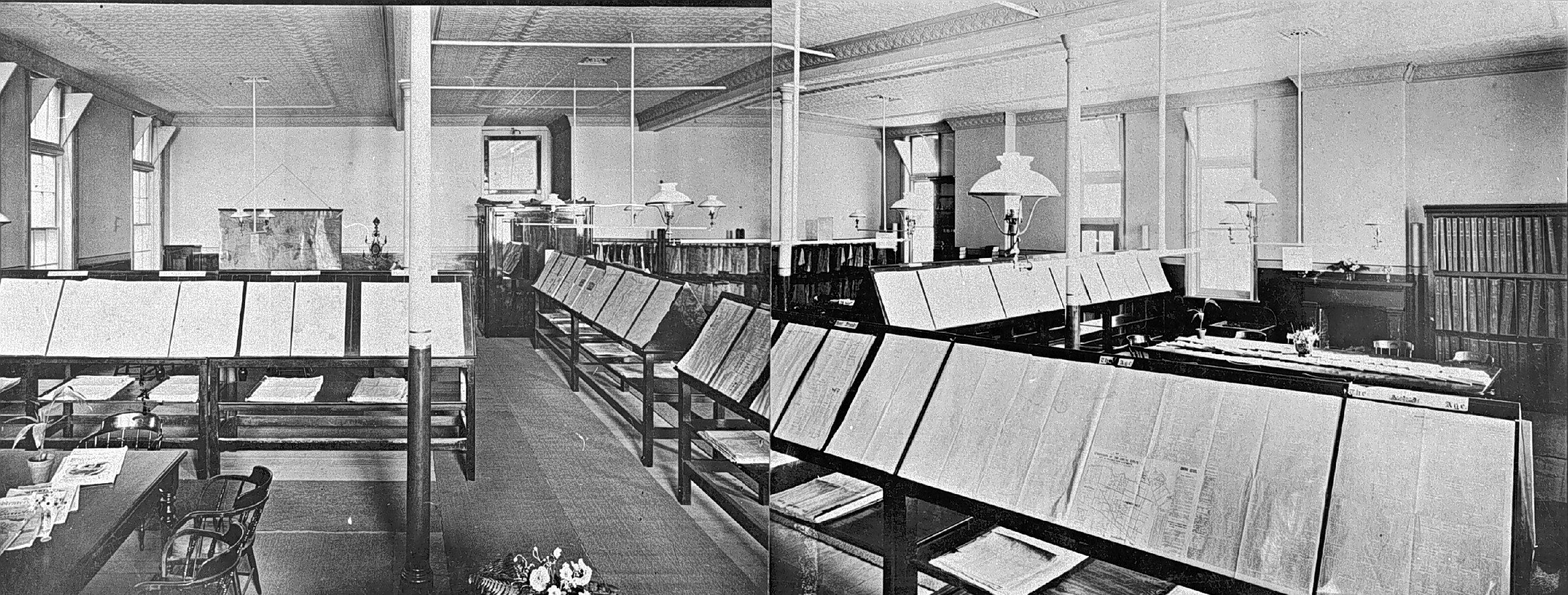
The sequence matters the same way it does in other records. I have written here about how a run of city directories builds a chronology no single volume supplies, and a run of a newspaper does the same job with more noise and more voice attached. In both cases the useful unit is the run rather than the entry.
The public collections have made this far more possible than it was. The National Digital Newspaper Program at the Library of Congress and the state partnerships funded through the National Endowment for the Humanities put whole runs on a screen that used to require a trip and a reservation. In Texas the Texas Digital Newspaper Program holds papers from towns that never had a historian assigned to them. The same digitization that built the search box also made continuous reading practical from a desk, and I think the second gift is the larger one.
Where Continuous Reading Stops Paying
Nobody reads every run of every paper, and a writer who claims otherwise is describing an ambition. The honest method is to search widely, take the list seriously, and then read continuously around whatever the list turns up, which consumes most of the time the search appeared to save. I have never found a way around that, and I have stopped looking.
There is also a failure of my own worth naming. Early in the work I built a paragraph on a hit that read as an endorsement, and when I finally pulled the whole page it was a paid notice, placed by a committee, printed in a paper that had opposed the man for two years and was happy to take the money. The sentence was accurate. My reading of it was wrong, and it survived three drafts before the page corrected me.
The last limit is money and time. Reading a run is cheap in dollars and expensive in months, and a person with a working life has to choose which windows deserve it. I choose the ones where the question is why rather than when, because a date can be confirmed from a hit and a motive almost never can.
Search finds the word. The page carries the story, and the page does not come to you.
A footnote signed Rosser Newton means I read the run, not the result.


Comments
Post a Comment